One Device at a Time: How Going Offline in Pieces Puts You Back Together
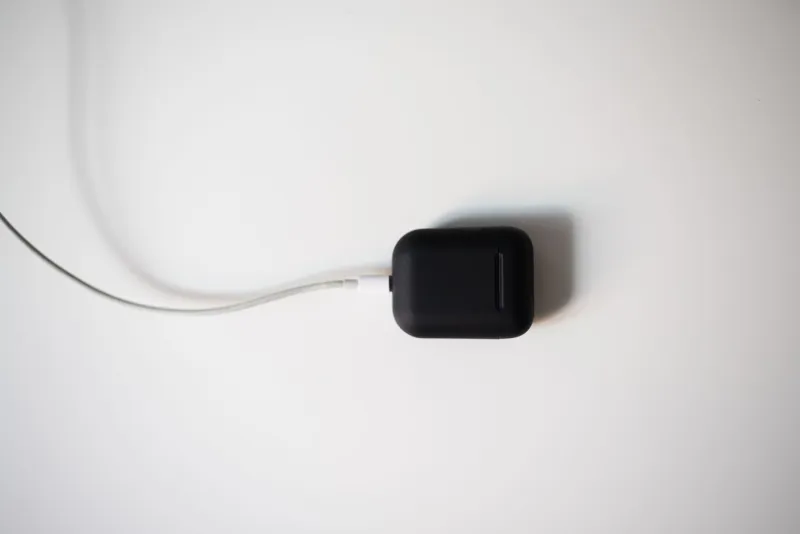
Somewhere between your smartwatch nudging your wrist, your earbuds auto-connecting to whatever room you walk into, and your tablet picking up where your phone left off, a strange thing happens: you stop being in any one place at all.
This is the quiet cost of seamless connectivity. It works so well that you barely notice it's happening. Everything flows. Everything syncs. And you — somewhere in the middle of all that elegant handoff — get a little more scattered with every ping.
The Invisible Web Between Your Gadgets
Bluetooth was designed to make life frictionless. And it does. Pairing is instant, audio switches without a thought, your health data moves from your wrist to your phone without you lifting a finger. From a pure engineering standpoint, it's genuinely impressive.
But here's what the engineers didn't put on the spec sheet: every connected device is also a potential interruption surface. When your watch mirrors your phone's notifications, you're not getting one alert — you're getting an alert on your wrist, a buzz in your pocket, and possibly a chime through your earbuds, all at once. That's three micro-decisions in under a second. Dismiss here or there? Glance now or later? Is this urgent?
Multiply that by a full day and you're looking at hundreds of tiny cognitive speed bumps. Neuroscientists call the cumulative effect of these small decisions "decision fatigue" — a gradual depletion of your mental bandwidth that makes every subsequent choice feel slightly harder. You don't notice it happening in real time. You just notice, sometime around 3pm, that you feel weirdly tired despite not having done anything particularly taxing.
Fragmentation You Can't See
There's a specific kind of mental fragmentation that comes with multi-device connectivity that's different from regular distraction. When your attention is split across screens, you're managing not just the content on each device but the relationship between them. Which one has the most recent version of that note? Did that message come through on my phone or my watch? Why is my laptop playing audio when my earbuds are connected to my phone?
These aren't serious problems. But they're persistent ones. And persistence is the issue. Your brain never fully settles into a task when part of it is quietly monitoring a web of devices for inconsistencies and updates.
Think of it like trying to have a real conversation in a room where every door is slightly open. You can do it. You're probably used to it. But some part of your attention is always half-listening for what might come through those doors.
What Monks Know About Separation
In contemplative traditions — Zen Buddhism, Benedictine monasticism, Vipassana practice — physical separation from distraction isn't punitive. It's structural. The monk doesn't leave behind their phone because the phone is bad. They create a container of single-pointed attention because that's the only environment in which certain kinds of clarity can emerge.
You don't have to go on a silent retreat to borrow from this principle. The logic translates: when you reduce the number of things competing for your awareness, what remains gets sharper.
Airplane mode is the most underused tool on your phone precisely because we've mentally filed it under "travel necessity" rather than "focus architecture." Turning it on doesn't mean you're unavailable. It means you're present — specifically, to whatever is directly in front of you.
The One-Device Experiment
Here's a practice worth trying, and it's less dramatic than a full digital detox: for one hour each day, choose one device to take completely offline. Not silent. Not do-not-disturb. Offline. Airplane mode, Bluetooth off, Wi-Fi off.
The goal isn't to cut off from the world. It's to collapse the web of connections down to one node — you — and whatever single thing you're doing.
If you're working on your laptop, put your phone in airplane mode. If you're reading on your tablet, disconnect your watch. If you're going for a walk, leave the earbuds at home. One device, one context, one thread of attention.
What most people notice first isn't productivity. It's a strange, almost physical sense of settling. Like the background hum you'd gotten so used to that you stopped hearing it — until it stopped.
Rethinking Seamlessness as a Feature
The tech industry has spent the last decade optimizing for seamlessness. The hand-off between your Apple Watch and your iPhone, between your AirPods and your MacBook, between your Alexa in the kitchen and the one in the bedroom — all of it is designed to reduce friction to zero.
But friction isn't always the enemy. A small amount of it — the deliberate choice to pick up one device rather than having everything available everywhere — is what creates intention. And intention is what separates using technology from being used by it.
This isn't a call to return to flip phones or live off the grid. It's a smaller, quieter suggestion: that you get to decide when the web between your devices is serving you, and when it's just keeping you tethered.
Building Your Own Offline Rituals
A few low-friction ways to start pulling back the web:
Morning, pre-coffee: Leave your watch on the charger for the first thirty minutes of your day. Let your body wake up without a wrist full of overnight data.
Deep work blocks: Airplane mode on your phone, Bluetooth off on your laptop. Give your browser tab your full attention instead of half of it.
Evening wind-down: Disconnect your earbuds an hour before bed. Let your auditory system have some unmanaged quiet. The podcast will still be there tomorrow.
Walks: One of the most countercultural things you can do in 2025 is take a twenty-minute walk without audio input. Your thoughts will fill the space. That's the point.
None of these are permanent. All of them are reversible. That's what makes them sustainable — they're not sacrifices, they're experiments in noticing what changes when the web goes quiet.
The Clarity on the Other Side
There's a version of your digital life where every device knows exactly what every other device is doing, all the time, and you sit at the center of that synchronized ecosystem, perpetually informed and perpetually fragmented.
And there's another version where you decide, deliberately and repeatedly, which thread to follow — and you follow it all the way to the end before picking up the next one.
The second version requires a little more intention. It requires occasionally tolerating the mild discomfort of not knowing what's happening on your watch while your phone is offline. It requires trusting that the seamless web will still be there when you need it.
But what you get in return is something the tech industry can't sell you: the experience of being fully somewhere, fully doing one thing, with your whole mind pointed in the same direction.
That's not a feature. That's presence. And it turns out, you have to disconnect a few things to find it.