Every Ping Has a Price: The Hidden Anxiety Tax of Stacking Your Alerts
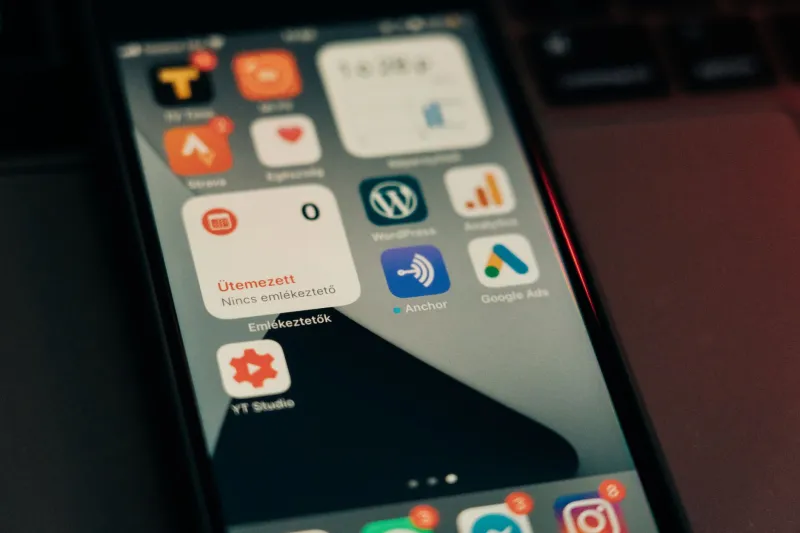
You probably don't feel anxious about one email. You might not even feel anxious about one Slack message. But somewhere between your morning alarm and your second cup of coffee, something shifts. There's a low-grade hum in the background of your day — a kind of mental static that doesn't trace back to any single source. That hum has a name. It's the notification stack, and it's quietly charging you interest.
The notification stack isn't just a metaphor. It's the layered system of alert pipelines you've allowed to run simultaneously: email, group chats, calendar reminders, social platforms, news apps, fitness trackers, delivery updates, badge counts on apps you haven't opened in weeks. Individually, none of them seem like a big deal. Collectively, they function like a background process your brain can never fully close.
Why One Alert Is Never Just One Alert
Here's the thing neuroscience keeps confirming: your brain doesn't process interruptions in isolation. Every time you're pulled away from a task — even briefly — your prefrontal cortex has to re-establish context when you return. Researchers at UC Irvine have found it can take more than 23 minutes to fully regain focus after a single interruption. Multiply that across a workday packed with Slack pings, calendar pop-ups, and the ambient awareness that your phone might be buzzing in your pocket, and you start to understand why you feel exhausted by 3 PM even when you haven't actually done that much.
The real tax isn't paid at the moment of the notification. It's paid in the cognitive drag that follows — the mental residue of an interrupted thought, the low-level vigilance of wondering what else might be coming. Psychologists sometimes call this "attentional residue." Zen practitioners might simply call it noise.
The Compounding Problem Nobody Talks About
What makes the notification stack uniquely punishing isn't the volume alone — it's the variety. Switching between notification types is more cognitively expensive than handling multiple alerts from the same channel. A calendar reminder requires a different mental frame than a direct message from your boss, which requires a different frame than a shipping notification from Amazon. Your brain isn't just context-switching; it's costume-changing. Repeatedly. All day.
This is where the anxiety tax becomes compounding. Each new notification system you add to your life doesn't just add its own alerts — it adds a new dimension of anticipation. You're not just waiting to hear from one channel; you're maintaining a kind of low-level readiness across all of them simultaneously. Over time, that readiness calcifies into a baseline state of alertness that feels normal but isn't. You've essentially trained your nervous system to treat every quiet moment as a pause before the next interruption.
What Zen Focus Actually Looks Like in Practice
Zen philosophy has a concept called ichigyo zammai — complete absorption in a single act. It's the idea that full presence in one thing is more valuable than divided attention across many. You don't have to be a practitioner to see how this applies to your notification setup. The question isn't how to manage all your alerts more efficiently. It's how to decide which systems deserve real-time access to your attention at all.
That's a harder question than it sounds, because we've been conditioned to treat availability as a virtue. Being reachable feels responsible. Responding quickly feels professional. But constant availability isn't the same as actual effectiveness — and the blur between the two is exactly what keeps most people from ever auditing their alert systems seriously.
A Framework for Ruthless Prioritization
Think of your attention as a physical space — a room with a door. Not everything deserves a key. Here's a simple framework for deciding what gets in:
Tier 1 — Real-time access: These are the channels where a delayed response has genuine, meaningful consequences. For most people, this is a very short list. Maybe direct calls from immediate family. Maybe a specific Slack channel tied to a live production system if you're in tech. The bar here should be: if I miss this for two hours, something actually breaks.
Tier 2 — Scheduled attention: Email almost always belongs here. So does most of Slack, most social platforms, and most app notifications. These channels don't require your immediate presence — they require your eventual presence. Batch them into two or three designated windows per day and close the door the rest of the time.
Tier 3 — Audit and eliminate: This is the category most people skip entirely. Badge counts on apps you use once a week. Breaking news alerts you never act on. Promotional emails masquerading as important updates. These aren't notifications — they're ambient noise wearing a notification's clothes. Delete them without guilt.
The goal isn't silence for silence's sake. It's creating a clear enough signal-to-noise ratio that when something genuinely needs your attention, you can actually hear it.
The Audit Nobody Wants to Do
Pull up your phone's notification settings right now. Scroll through the list. For every app with notifications enabled, ask yourself one question: When was the last time an alert from this app required me to act immediately? If you can't remember, that's your answer.
Most people who do this exercise are surprised by how many systems they've given real-time access to without ever making a conscious choice. The notifications weren't invited — they defaulted in during setup, or crept in after an update, or arrived because you clicked "allow" at a moment when you just wanted to get past the permission screen. You didn't choose your notification stack. It accumulated.
Rebuilding it intentionally — even partially — tends to produce a noticeable shift within a few days. Not because your workload changes, but because your nervous system stops bracing for impact every few minutes. The hum quiets. The static clears. What's left is something that feels, in the best possible way, a little boring.
One Channel at a Time
You don't have to overhaul everything at once. Start with one system. Pick the channel that feels most intrusive — the one whose alerts land with the most interruption — and push it to scheduled batching for one week. Just one week. Notice what happens to your focus in the hours between check-ins. Notice whether any actual emergency was missed.
In most cases, nothing breaks. What breaks, instead, is the assumption that all of this was necessary.
The notification stack was never designed with your wellbeing in mind. It was designed to keep you engaged, available, and responsive — to the platforms, to the tools, to everyone but yourself. Rebuilding it on your own terms isn't a productivity hack. It's a quiet act of reclamation.