You Deleted the App. So Why Is It Still Talking to You?
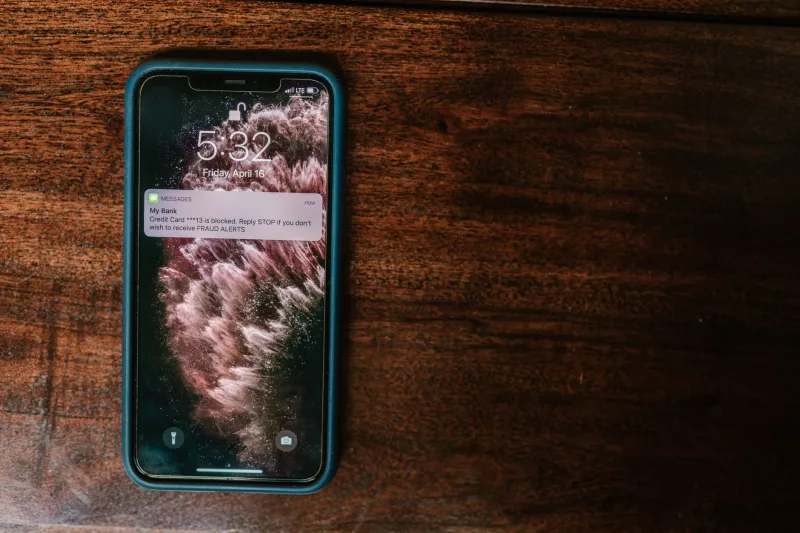
There's something deeply unsettling about getting a notification from an app you deleted three weeks ago. You did the thing. You held the icon until it wobbled, tapped the little X, maybe even felt a small wave of satisfaction. And yet — there it is. A buzz. A banner. A little red badge haunting the corner of your lock screen like it never left.
Spoiler: it kind of didn't.
This isn't a glitch, exactly. It's a symptom of how layered our device ecosystems have become — and how poorly most of us understand the invisible threads connecting our apps, browsers, watches, and accounts. If you've ever wondered why digital decluttering feels incomplete even after you've done it, this is probably why.
The Many Lives of a "Deleted" App
When you delete an app from your phone, you're removing the software itself. But the app's reach doesn't live entirely on your phone. A lot of it lives in the cloud, in your browser, and on whatever other devices share your account.
Here's where things get weird:
Web push notifications are one of the sneakiest culprits. If you ever visited an app's website and clicked "Allow" on that little browser permission popup — maybe you were in a rush, maybe you just wanted it to go away — that permission is still active. The app company can still push alerts directly to your browser on your laptop, your tablet, or anywhere else you're logged into Chrome, Safari, or Firefox. Deleting the app from your phone does nothing to revoke that.
Smartwatch echoes are another one. If you paired an app with your Apple Watch or Fitbit at any point, the watch may have cached notification permissions independently. Some watches maintain their own lightweight connection to app servers, meaning your wrist can keep buzzing even after your phone has moved on.
System-level reminders are trickier still. iOS and Android both allow apps to schedule local notifications — alerts that are stored on the device itself and fire on a timer, no internet required. If an app set a recurring reminder before you deleted it, that trigger can sometimes survive the uninstall, especially on Android, where storage partitions work differently depending on the manufacturer.
Account-linked emails and SMS round out the graveyard. The app is gone, but your email address is still on their list. Your phone number is still in their CRM. You'll keep getting "We miss you" messages until you manually unsubscribe or scrub your data — which, let's be honest, most of us never do.
Why Your Brain Plays Along
The technical stuff explains how ghost notifications survive. The psychological stuff explains why they bother us so much — and why we sometimes click them anyway.
There's a concept in behavioral science called the Zeigarnik effect: we tend to remember and fixate on unfinished tasks more than completed ones. An app you deleted but can't fully escape sits in a weird liminal state in your brain. It's not done. There's still a thread. And every time a ghost notification appears, it tugs on that thread.
This is especially true for apps tied to social identity — fitness streaks, social platforms, games with leaderboards. The notification isn't just a ping. It's a tiny accusation. You left. Are you sure about that? Your nervous system registers it whether you want it to or not.
App companies know this, by the way. Re-engagement notification campaigns are a real thing, deliberately timed to catch you during moments of potential weakness — Sunday evenings, Monday mornings, the start of a new month. The ghost isn't random. It's engineered.
How to Actually Close the Loop
True digital closure takes a little more intention than a long-press and a tap. Here's a practical sequence that actually works:
Start with your browser permissions. In Chrome, go to Settings → Privacy and Security → Site Settings → Notifications. In Safari on iOS, go to Settings → Safari → Advanced → Website Data. Audit what's in there and revoke anything you don't recognize or no longer use. This alone can silence a surprising number of phantom alerts.
Check your watch separately. If you wear a smartwatch, go into its companion app and look at the notification settings independently. Don't assume that deleting the phone app automatically cleaned up the watch's configuration — it often doesn't.
Clear scheduled local notifications on Android. If you're on Android and notice alerts firing from apps you've removed, a full cache clear or — in stubborn cases — a factory reset of notification settings can help. Some third-party cleaner apps can also surface and delete orphaned notification schedules, though be selective about what you install for this purpose.
Unsubscribe from email and SMS. Go to your email and search the app's name. Find any marketing or reminder emails and hit unsubscribe. For SMS, reply STOP to any texts you're still receiving. If the number doesn't honor that, block it.
Request data deletion where it matters. Under CCPA in California (and similar frameworks gaining traction in other states), you have the right to request that companies delete your personal data. Most major app companies have a data deletion request form buried in their privacy policy page. It takes five minutes and it's the cleanest break you can make.
The Zen of Finishing What You Start
In a lot of mindfulness traditions, unfinished business isn't just a productivity problem — it's an energetic one. Every loose thread pulls a little attention. Every ghost notification is a small interruption in your ability to be fully present with what you've actually chosen.
Deleting an app should be a complete gesture. A bow at the end of a practice. But right now, most of our devices don't support that kind of clean finality — so we have to build it ourselves.
The good news is that once you go through this process once, it gets faster. You start to understand the full footprint an app leaves behind before you even install it. You get more intentional about what permissions you grant, what accounts you create, what browser pop-ups you click through without reading.
That awareness is really the whole point. Not just a quieter phone — a clearer sense of what you've actually invited into your life, and what you're ready to genuinely let go.